10 Paces
Another Paleontology History

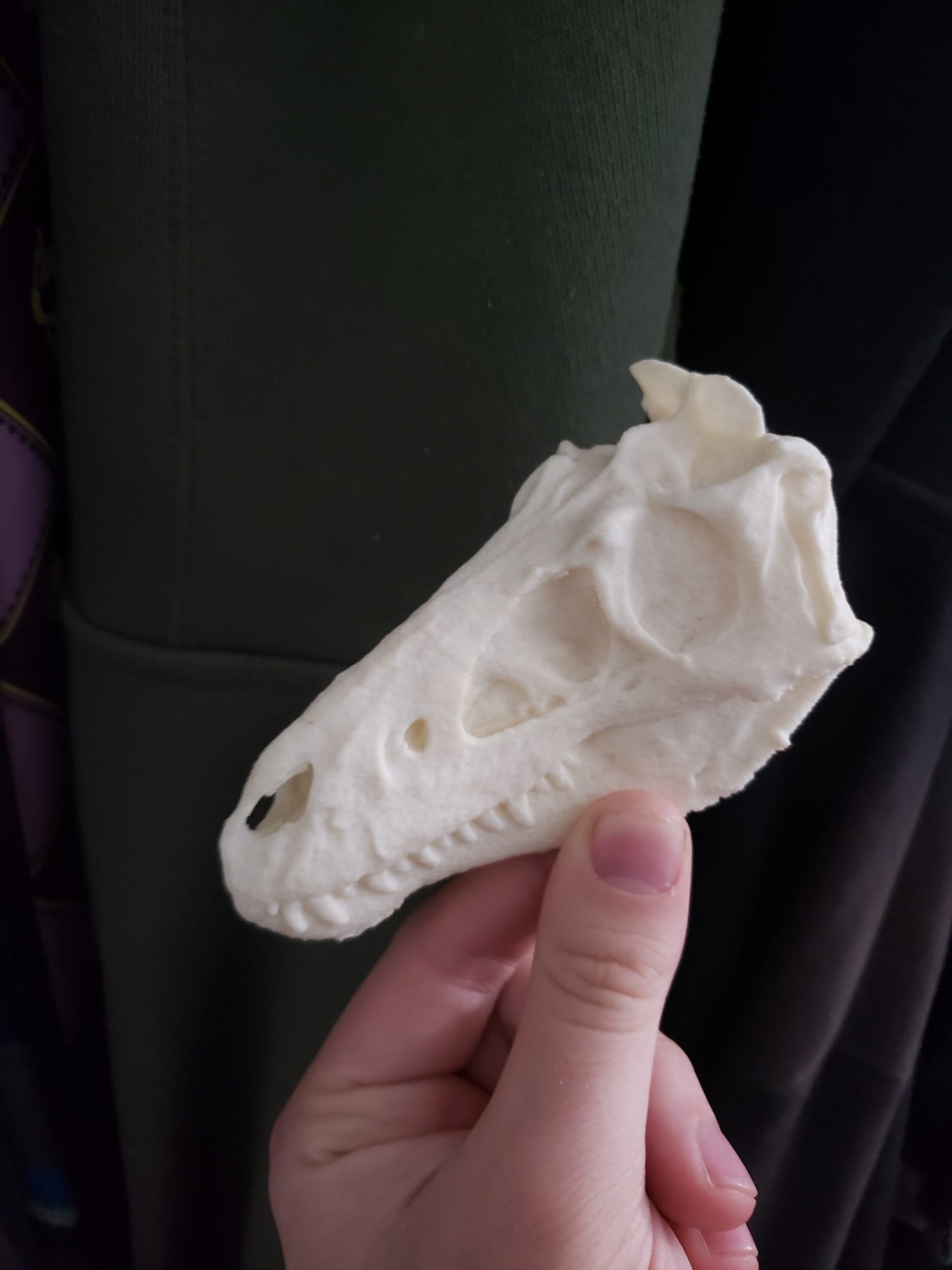
When I was in college, I was in charge of the 3D printer we had in our geology lab. It would occasionally need maintenance, and when people wanted things printed, I would help them do it. As a result of this I did my fair share of printing myself. I spent quite a few afternoons scrolling Sketchfab and other websites for interesting fossils and bones to print. But, I remember one of the first things I ever printed being one that I had specifically sought out. It still sits on my bookshelf years later. It represents a fossil called CMNH 7541. This is of course the specimen number used to refer to it in scientific literature, and in casual conversation on the topic it is more commonly referred to as “The Cleveland Skull,” for its permanent home in the Cleveland Museum of Natural History. It was first described in 1946 by Charles Gilmore as a species of Gorgosaurus, and moved around between a few genus until 1988 when Robert Bakker, Michael Williams, and Phillip Currie published a paper declaring that the skull belonged to a new genus of Tyrannosaurid. This idea would go on to become one of the most acidic debates in modern dinosaur science: the identity of this skull, and several subsequent specimens, which are now inextricably linked to the name Nanotyrannus: the little tyrant. The debate has now raged for 38 years, and the whole thing has recently reminded me of a wild west-style duel, where each man takes a fateful ten steps before taking a final shot to decide the victor.
A Question of Size
The Cleveland Skull is a charismatic little fossil. In reality it is about 2 feet long, and prepared excellently. I think there is something undeniably charismatic about a miniature. The idea that we can get all the details and features we love about something in a more compact and manageable size is fascinating. CMNH 7541 is obviously smaller than the animal it bears a strong resemblance to: Tyrannosaurus rex. This might seem a trivial thing to go over here, but it’s important to understand the full picture of what that means. There are essentially two reasons that this skull could be smaller than its more well known cousin. First, it could be because it is a different animal. It could be Nanotyrannus, a species of Gorgosaurus, or something else entirely. Second, and crucial to our story: it could be a young version of another animal. The reason this skull invites comparison to Tyrannosaurus is because it comes from the Hell Creek/Lance formation, and there is only one member of the Tyrannosaurid family known from those rocks: T. rex. The arguments against the skull belonging to a species of Gorgosaurus are not worth going over in detail, except to say that they have generally fallen out of favor, which leaves us with our two sides fairly well established. On one side of the argument: the fossil is Nanotyrannus. On the other side: the fossil is a juvenile T. rex. This is how our dueling sides get their start.
Tooth Count
There is more than size making the Cleveland Skull unique. It has a few features that caused the scientists studying it to first come to the conclusion that it could be a new genus. The original paper proposed one of the main distinguishing features of Nanotyrannus was its stereoscopic vision, i.e. its eyes are remarkably forward-pointing in its skull, meaning it would have strong depth perception. As an argument in favor of Nanotyrannus, this point has largely fallen by the wayside in favor of more concrete arguments, since this is the type of change that can naturally change as an animal grows, or can be altered by aerth-shifting processes that happened to the skull after it was buried.
One of the arguments that has persisted since the beginning lies in the dinosaur’s mouth. Both Nanotyrannus and Tyrannosaurus have a mouth of strong, sharp, crushing teeth. But perplexingly, Nanotyrannus has more. Adult Tyrannosaurus have around 13 teeth in their dentary; that is, their bottom jaw. Due to the high volume of known adult Tyrannosaurus specimens, we can actually speak fairly confidently when we say that this number is pretty consistent, only ever varying by one or two between individuals. The Cleveland Skull (as well as two other specimens yet to be introduced) have 16 and 17 dentary teeth. To put this is perspective: Tarbosaurus bataar, one of Tyrannosaurus’ closest relatives, and an animal for which we have more confidence in our identification of conspecific (members of the same species) juveniles, has 13 dentary teeth in both the adult and juvenile specimens. Tooth sockets are something that archosaurs (represented in the research by crocodilians) establish when they are still an embryo, and no known species of archosaur is known to gain or lose those sockets as they grow. Though there is a fascinating outlying case highlighted in the research of a species of dinosaur that grows a beak over its front-most tooth sockets as it grows, but even this extreme example retains all of its original tooth sockets even after it stops using them. The number of teeth in the maxilla (the top jaw) follows a similar pattern. This feature alone is not enough to convincingly erect Nanotyrannus as a valid genus, but as the audience can no doubt read, we are far from done.
The Quadratojugal
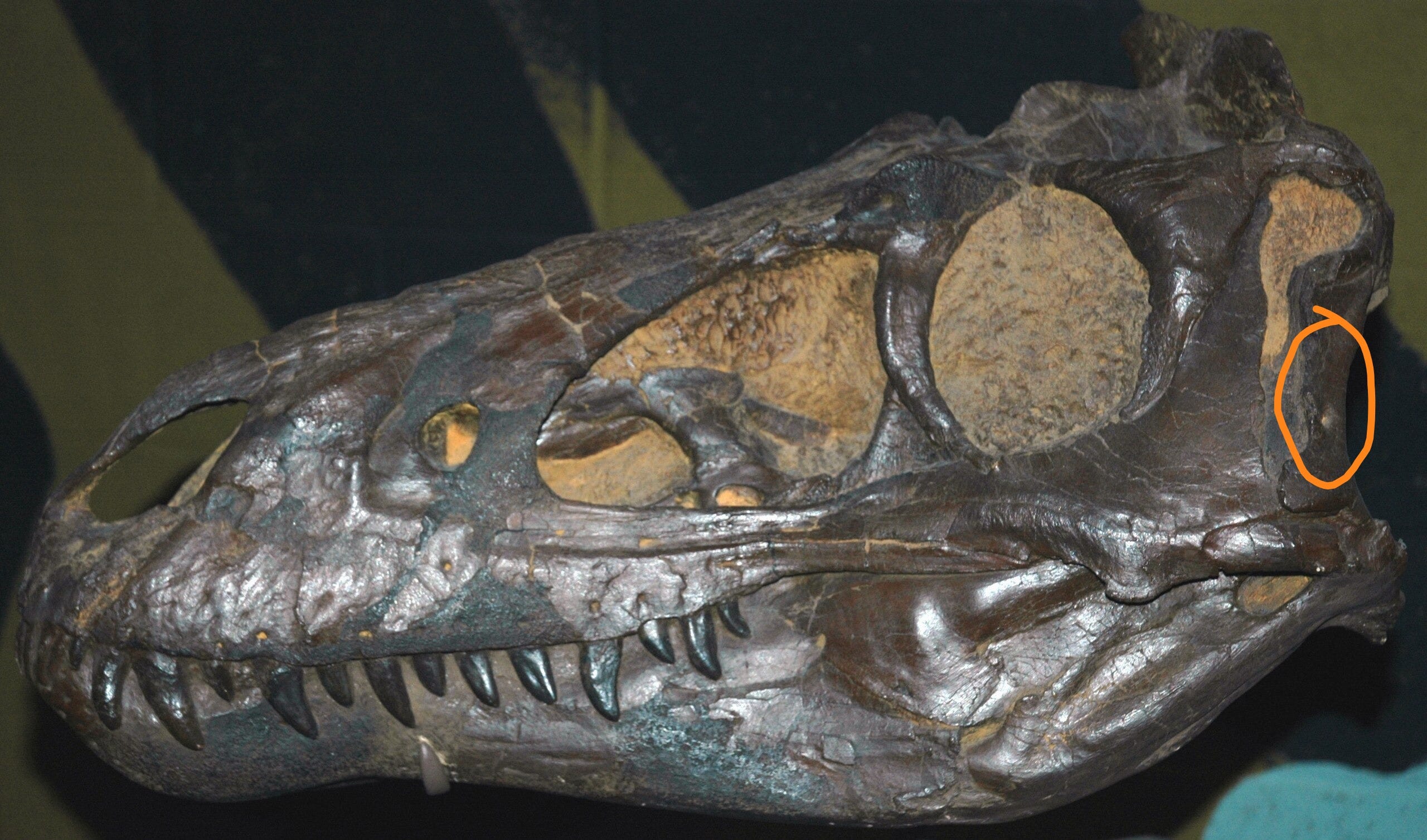
Another feature of the skull that gives scientist’s pause in their identification comes from a bone called the quadratojugal. The etymology of that word is honestly rather charming. The bone connects the quadrate bone and the jugal bone. The bone is located at the back end of the skull, near the opening that forms the ear. The quadratojugal of Nanotyrannus has a small pit in it. This pit; known formally as a “pneumatic recess,” is not present in adult Tyrannosaurus. There are examples of other Tyrannosaurids that gain a pit like this as they grow, but none are known to lose it. Once again alone this wouldn’t be enough to constitute a new genus, but its presence on all the known Nanotyrannus specimens is conspicuous.
Where are the juvenile rexes?
So far there are a few abnormalities that make CMNH 7541 a unique specimen. There are some indications that it might even represent something new. However, there is a problem; a problem that threatens to end the debate. You see, there is an interesting abnormality about the Hell Creek Formation. It is biased. It turns out a lot of fossil-bearing rocks are biased. Conditions present around the fossils as they were being preserved have favored certain organisms over others to be fossilized. One of the most common types of bias a formation can have is one based on size. Some places have a bias towards preserving small organisms; perhaps due to rough conditions destroying larger animals before they could be buried. Hell Creek has a bias towards large animals. A significant portion of the fossils found in Hell Creek belong to Tyrannosaurus, Triceratops, and Edmontosaurus, some of the biggest animals in the ecosystem. Smaller animals, like small dinosaurs, mammals, and invertebrates are relatively rare. This is why this whole debate has happened. You see, one might ask: if there’s a question of identity, why can’t we compare the alleged Nanotyrannus specimens to confirmed juvenile Tyrannosaurus ones to see if they match? Well, they are the juvenile T. rexes. Juvenile rexes are just as rare as Nanotyrannus, if it exists. So then, one might ask, if we have a large Tyrannosaur in the ecosystem already, and we find what looks like a smaller version of it, shouldn’t Occam’s Razor dictate that these animals must be juveniles of that large Tyrannosaur even if they have some abnormalities? That argument; convincing though it might be, is unfortunately circumstantial. Going off of a single skull, of an unknown stage of growth, just isn’t enough to seal the metaphorical deal unless it could be conclusively proven that these animals were juveniles. In 2001, we found one that was conclusively a juvenile.
Skeletal Fusion
The second main character to enter center stage of this discussion was found by a team from the Burpee Museum of Natural History, which is located just outside of Chicago. The new specimen was nicknamed “Jane” (BMRP 2002.4.1), and promised to more than double the available data for scientists to sink their teeth into. Jane consisted of most of a skull, parts of the spine, ribs, hindlimbs, and a set of hips. Jane shares all of the traits we’ve discussed already, but is much more complete, and her discovery skyrocketed the debate to a whole new level. Discussions went from passionate to heated. Papers were written back and forth with high profile paleontologists on both sides of the debate, all centered on one main question: is Jane a juvenile, or an adult? If Jane is a juvenile, then she’s almost certainly a Tyrannosaurus. If she’s an adult, then she’s Nanotyrannus. It all came down to fusion. Anyone who’s ever received instruction on how to hold a baby has probably been told to be careful when touching the head. A baby’s head is soft and still malleable. This is because their bones haven’t fused yet. All vertebrates begin their life with the majority of their bones disjointed from each other, and over the course of their life they fuse together. In theory this can allow us to assess the maturity of a given specimen based on how fused their bones are. However, this is easier said than done. Some bones in Tyrannosaurus are unfused even in the oldest known individuals like “Sue” (FMNH PR 2081). Once again disagreements arose. Some bones like the vertebrae and parts of the skull are unfused, but the shoulder blades and the hips are at least partially fused. Which fusions matter? how fused does a suture have to be to be considered fused? We haven’t fully answered these questions yet. Once again; even with the addition of Jane, the lack of data frustrates our attempts at certainty. However, the general consensus lands on the side of Jane being a juvenile, and T. rex science begins to move on with Jane filling in a crucial place in the increasingly remarkable Tyrannosaurus growth curve.
Would a Nanotyrannus by any other name sound as sweet?
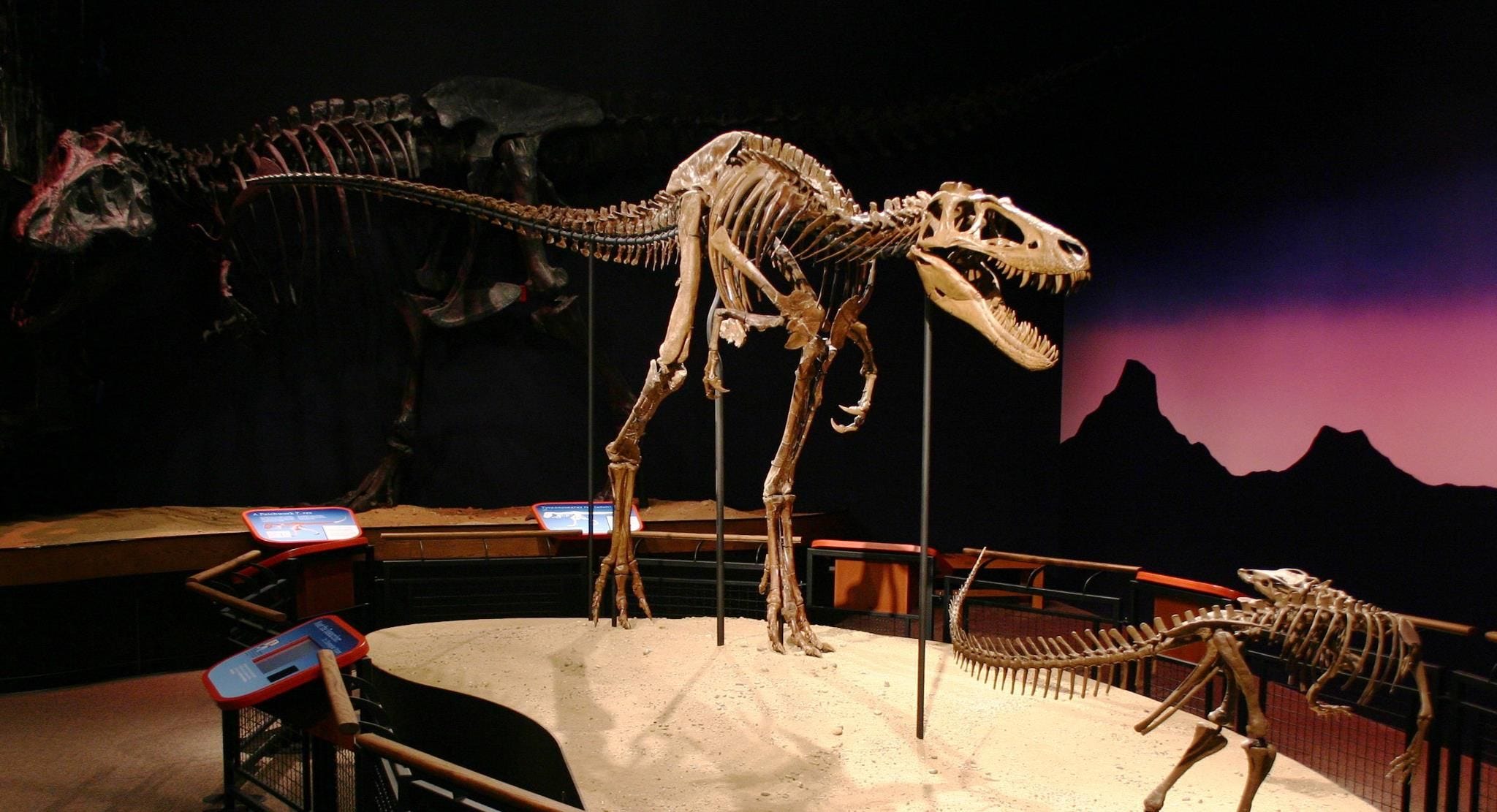
As we hit the halfway point in this journey, I want to take a moment and analyze this story from another perspective: that of public perception. You see, this was a battle fought not just between academics, but in the minds of amateurs and enthusiasts. The Burpee Museum of Natural History opened a cutting-edge exhibit called “Diary of a Dinosaur,” a documentary was made, titled “The Mystery Dinosaur,” a book was written, and people on forums and Facebook groups were exploding. The debate catches the proximal star power of being associated with T. rex after all. Most of the time when a new theropod gets discovered, the popular media can’t help but compare it to T. rex, and I think most people on some subconscious level recognize the inherent misnomer in those statements when they see reconstructions of the animals, but this debate is about an animal that actually is a close relative of T. rex and in fact might be T. rex. This coupled with a charismatic name made the debate irresistible. Nanotyrannus was also one of the first of a series of small Tyrannosaurs to be discovered and named (following it were Nanuqsaurus, Raptorex, Appalachiosaurus, Moros, and Suskityrannus), but none of them generated quite the hype that Nanotyrannus did. As the hype rang back and forth, and the academic consensus slowly crystallized around these two specimens being Tyrannosaurus rex, there were whispers about a third specimen preserved in combat with a Triceratops, held in private hands, even more complete than Jane, that would completely end the debate; not in favor of Tyrannosaurus, but in favor of Nanotyrannus. Generally, most people didn’t take these claims very seriously as the specimen couldn’t be formally studied, and images of it were not publicly available. And so it persisted as a whisper and a myth, until recently. Last year, the North Carolina State Museum acquired the “Dueling Dinos,” and this year, they published NCSM 40000, aka “Bloody Mary,” aka “Warhammer.” The paper was written by Lindsay Zanno and James Napoli. The cowboys in our fictional duel are about to draw.
The Tail
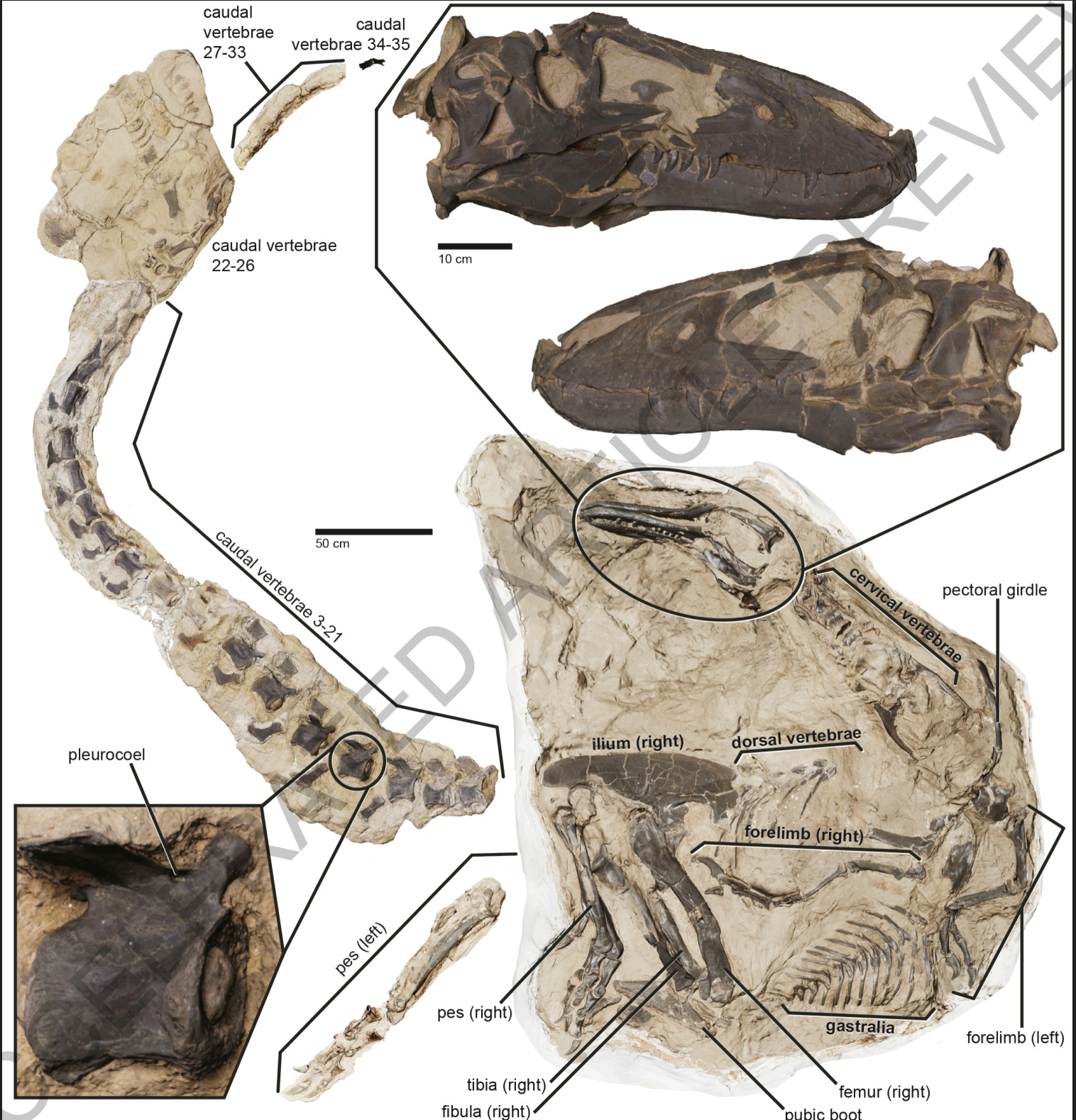
The first thing that Warhammer possesses that none of the previous specimens had is a complete tail. Like the teeth before, the difference is in the numbers. Also like teeth, the number of vertebrae is something determined in embryonic development, and that doesn’t naturally change as the animal grows. Adult Tyrannosaurus have between 40-45 vertebrae. Warhammer has 35. Small variations in vertebrae count have been observed in fish, amphibians, and snakes, but this would represent an increase of roughly 15% over the animal’s growth, which would be unprecedented.
The Arms
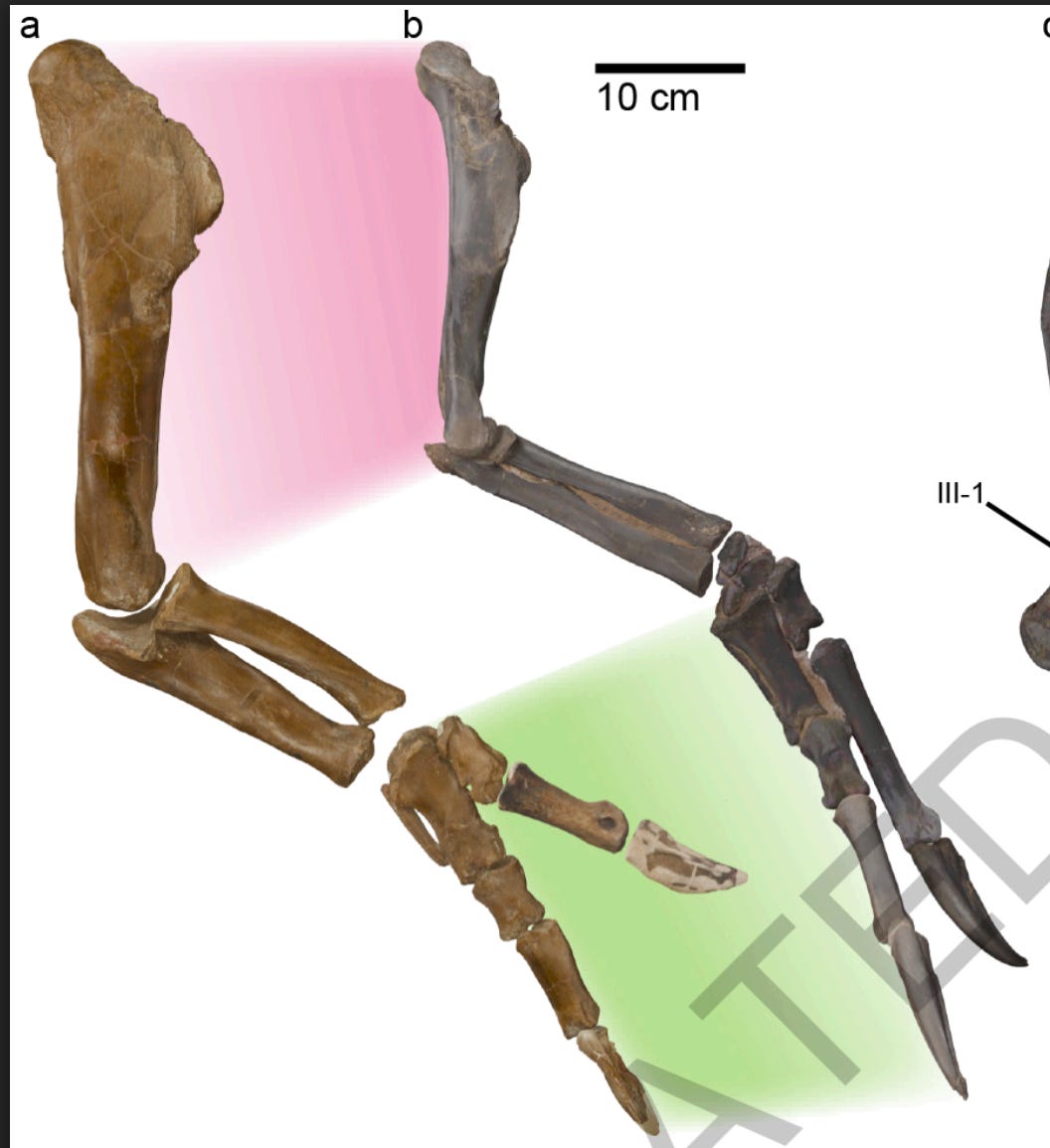
The second revelation that Warhammer brings to the table is the forelimbs of Nanotyrannus. This was one of the things people were whispering about, and it turns out they were right. The forelimbs of Warhammer; specifically the hands, were in fact larger than those of Tyrannosaurus. Importantly, this was not in a relative sense, but in an absolute sense. The humerus is smaller as would be expected, but the radius/ulna are longer, and the finger bones especially are longer. For bones to shrink as an animal grows, would also be unheard of.
The Nanotyrannidae family
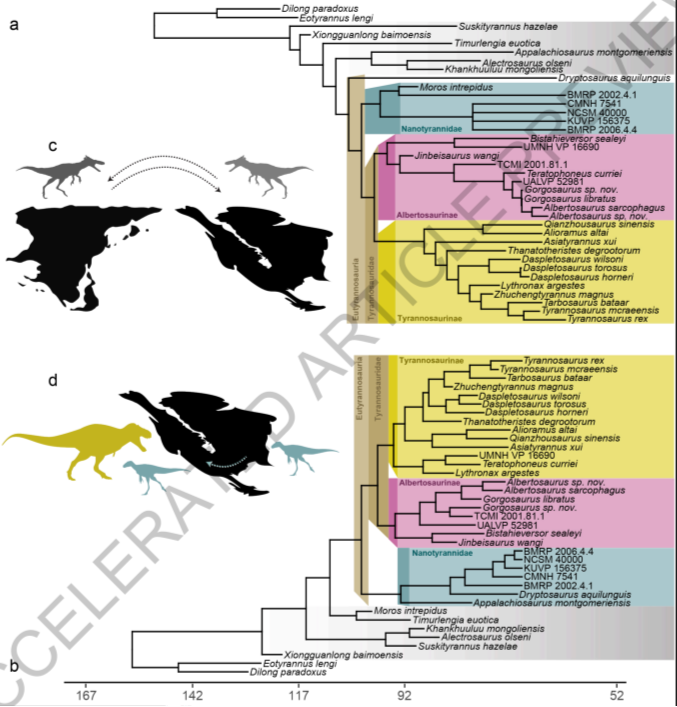
Another piece of evidence presented in the Zanno and Napoli paper was a formulation of the Tyrannosaur family tree based on this new evidence. Creating an evolutionary tree; or “cladogram,” is a fairly involved process which in this case started with a pre-existing data matrix called C17. C17 was assembled by other Tyrannosaur researchers to be used for analyses just like this. Zanno and Napoli added data and altered some characters based on their own observations. Their final matrix contains 441 distinct characters representing things like measurements of certain bones, and the presence or lack of features on particular specimens. These characters are each recorded for a total of 55 Operational Taxonomic Units (OTUs) some of which represent individual specimens, and some of which represent more well established whole species. This leads to their final matrix containing a total of 24,255 total data points! This matrix of data was run through a program for “parsimony analysis.” Parsimony seeks to mathematically determine the groupings and paths that lead to the fewest total changes happening in the tree. The program then produces a visual tree that can be viewed and used for research.
I won’t bore our audience with the further details of exactly how their two analyses were conducted, but what’s important to know is that they did the analysis two different ways. Both analyses grouped Warhammer, Jane, and the other Nanotyrannus specimens in their own group. They differed over where exactly in the Tyrannosauroidae superfamily they place them, but both agree that Nanotyrannus stands by itself. Thus, the authors in this new paper have erected the Nanotyrannidae family to house the freshly resurrected Nanotyrannus lancensis and the newly erected Nanotyrannus lethaeus, aka Jane, which the parsimony analysis suggests is its own larger sister species.
The Growth Rings
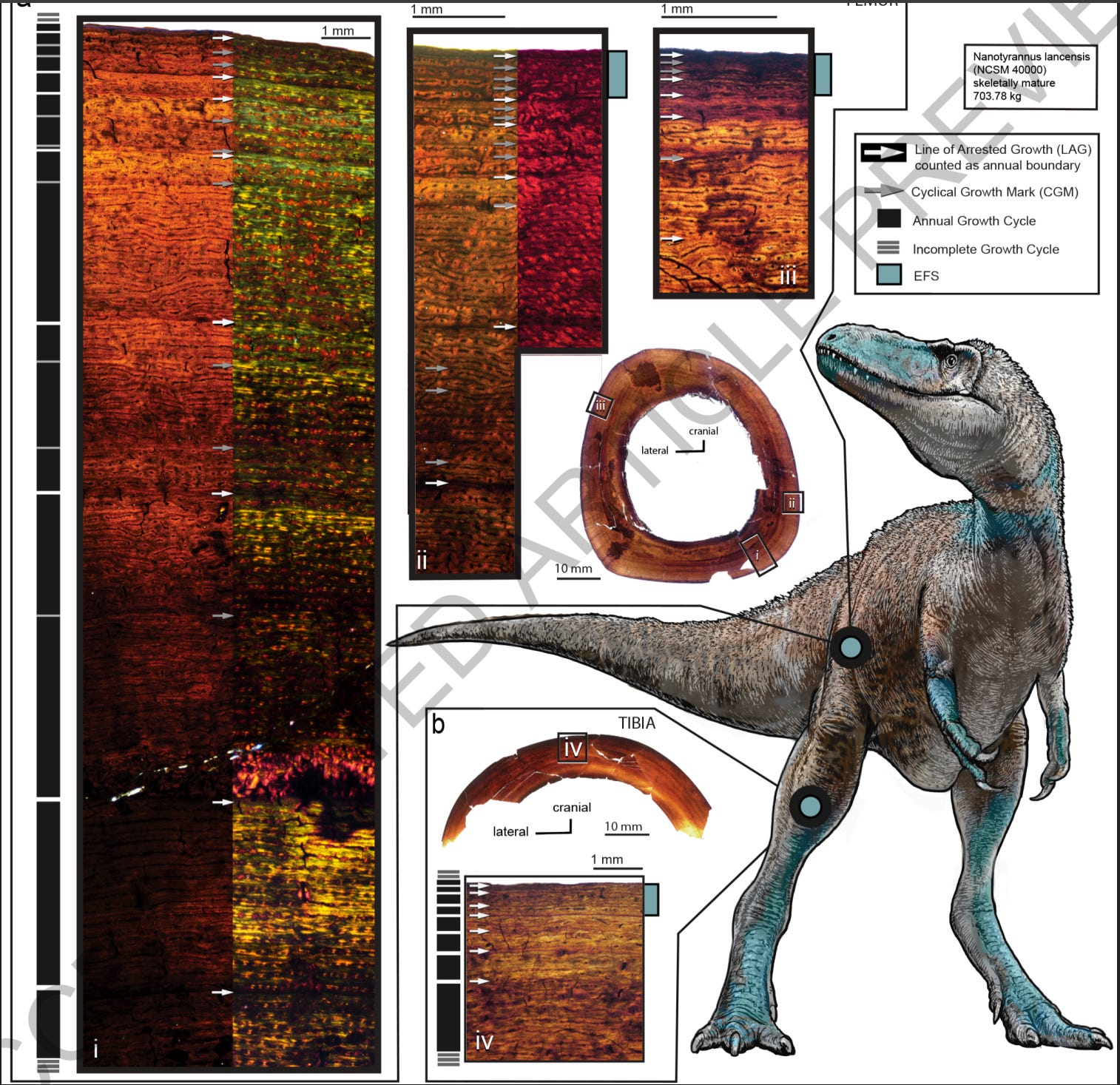
The smoking gun in this entire story; the thing that in my opinion seals the deal and makes this debate well and truly over, is deceptively simple. If this piece of evidence were not present, the consensus probably would swing back towards Nanotyrannus being valid, but I don’t think the debate would have definitively ended. This final piece of evidence comes from inside the bones. You see, vertebrates grow in a similar way to trees. Our bones grow new layers over the top of the old ones. This produces growth rings that can be examined to determine many things about an organism, such as how old something is, how much nutrition the organism is getting, and how mature it is. It turns out that when we cut into Warhammer’s bones and look at those growth rings, that her growth rings are getting thinner and thinner the closer we get to the outside of the bone. That means that her growth was slowing down. This is definitive proof that Warhammer was nearing or had already reached her adult size, and therefore since the difference in size is so stark, she must be a different genus than Tyrannosaurus.
Now, some people might be tempted to look at this story and come away with the opinion that everyone should have listened to them and that Nanotyrannus was valid all along, and that some sort of “scientific establishment” kept the truth from getting out sooner. And, to those people I would say this: this story is a perfect example of our modern scientific method working exactly as it was meant to. One of the few things that every researcher; and by researcher I mean accredited scientists, not people like me who just write about this stuff, agreed on before Warhammer was discovered was that we needed more data. Two specimens and a few other fragments was never going to be enough to settle the debate one way or the other, and every prominent scientist on both sides of the argument agreed on that. Those same scientists would have also agreed as a result of this that the debate was not settled, and that until more information came out, the majority opinion should remain just that: a majority opinion, not a true consensus.
So that’s Nanotyrannus. Nearly four decades of paleontological back-and-forth has come to the end of a chapter. As someone who has been following this debate since I was old enough to understand it, it feels a little bit bittersweet to see it end. But of course, it isn’t really over. Nanotyrannus being restored to validity means that whole swaths of research covering Tyrannosaurus growth and ecology now needs to be revisited. If this Nanotyrannidae family sticks around, where did they come from? Why did they not achieve the same large sizes as their Tyrannosauridae cousins? What was their ecology like? Are there other small genus hiding in the “juveniles” of other large Tyrannosaurids? How did Nanotyrannus fit into the greater Hell Creek ecology? These are all questions that people are going to be asking, and as we continue the pursuit of greater and greater certainty, we can take some pride in the fact that we all got the pleasure of being around when this one got answered.
Sources:
Bakker, Robert T. and Michael Williams. “Nanotyrannus, a new genus of pygmy tyrannosaur, from the Latest Cretaceous of Montana.” (1988).
Hone, David W. E., and Scott Hartman. The Tyrannosaur Chronicles: The Biology of the Tyrant Dinosaurs. Zed Books, 2021.
Parrish, J. Michael, et al. Tyrannosaurid Paleobiology. Indiana University Press, 2021.
Prothero, Donald R. “Systematics.” Bringing Fossils to Life: An Introduction to Paleobiology, McGraw-Hill, 2004, pp. 46–63.
Zanno, Lindsay E., and James G. Napoli. “Nanotyrannus and tyrannosaurus coexisted at the close of the cretaceous.” Nature, vol. 648, no. 8093, 30 Oct. 2025, pp. 357–367, https://doi.org/10.1038/s41586-025-09801-6.