Killer
Deconstructing a mythos

Let’s pretend for a moment that you are some sort of nigh-omniscient deity with the power to create life. And then furthermore lets pretend you decide you want to create the perfect predator: an animal optimally designed to kill. How would you design such a thing? Well, you’d probably want to start with teeth. You’d want to give it sharp teeth that point backwards slightly so that anything struggling to stay in the creature’s mouth would only injure itself further. You’d give it reasonably powerful jaw muscles to hold onto the animal while it struggles. Next, you’d probably move on to claws. Most vertebrates have four limbs, and we’re probably designing a vertebrate, so we’ve got four limbs worth of claws. One set of limbs can hold down prey while the other set of limbs and most primarily the mouth do the actual killing. We want our claws to be large, but large claws tend to get dulled by walking on them all the time, so we’d need to incorporate some mechanism to keep them off the ground. We’d want it to be fast, but also stealthy; powerful, yet precise. It would need a covering on its skin to help it regulate its temperature in varied climates. The ability to swim and climb trees would be nice since those are places where prey could potentially run away to. We wouldn’t want to make it too big, because then it would lose the ability to hunt small things, so something of middling or even small size seems appropriate. After all, the final thing we’d probably want to give it is a big brain. Smart animals can form strategies, solve problems, and most crucially they can work together. If one of our predators can’t take down a large animal, maybe three or five can. This template would create an animal that is adaptable to nearly any environment, capable of taking down a very wide selection of prey, and able to consciously adapt to any changes that might present a danger to it. It probably wont surprise you when I say that the animal I’m describing here is real. Its a cat. Cats are some of the most successful predatory animals to have existed since the dinosaurs died out. So why then, can we not seem to get our minds off of the raptors, and their oh-so-charismatic signature sickle claw?
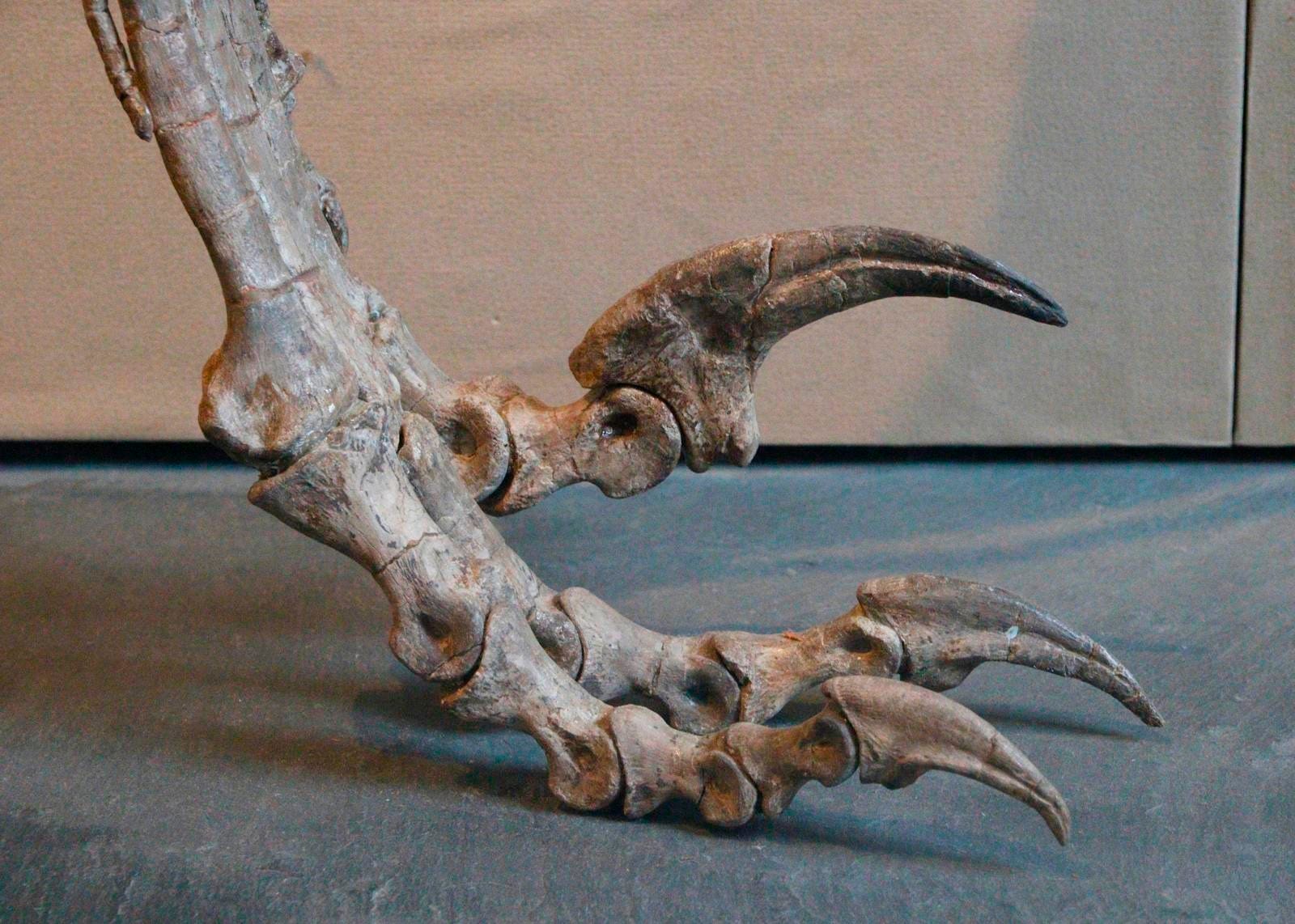
In 1922, Barnum Brown and William Diller Matthew described a new genus of small carnivorous dinosaur called Dromaeosaurus. It was of some note at the time because of its small size; not more than two meters in length, the fact that it was likely a fast runner, and the curiously large claw it bore on the second toe of each foot. Just two years later Henry Fairfield Osborn described a small skull from the Gobi Desert of a similar animal he called Velociraptor. Then in 1969, John Ostrom referred some new material his team had discovered, as well as some older material discovered by Brown to a new genus he called Deinonychus, a slightly larger animal. Lastly, in 1993 Jim Kirkland’s team described the genus Utahraptor, a particularly large member of the family. Though there are many other genus of dromaeosaurs, these four genera would come together to become the main pillars of the thing that would become the public perception of a “raptor.” Speaking of that, the name “raptor” is a borrowed one. Its a derivation of the Latin word for stealing that has been used for centuries as a catch-all term for birds of prey: eagles, owls, vultures, and their relatives (how poetic considering the role the dinosaur “raptors” now play in tracing the evolution of birds). Using the word “raptor” to refer to this particular family of dinosaurs came into use later, so to keep things unconfusing, its sometimes easier to refer to them by their more formal family name: the Dromaeosaurs, named of course, for their first member.
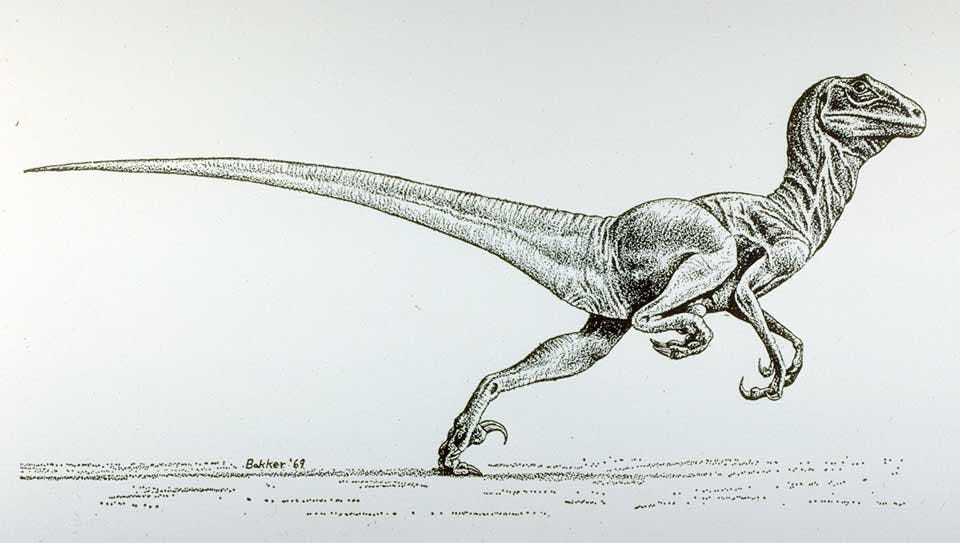
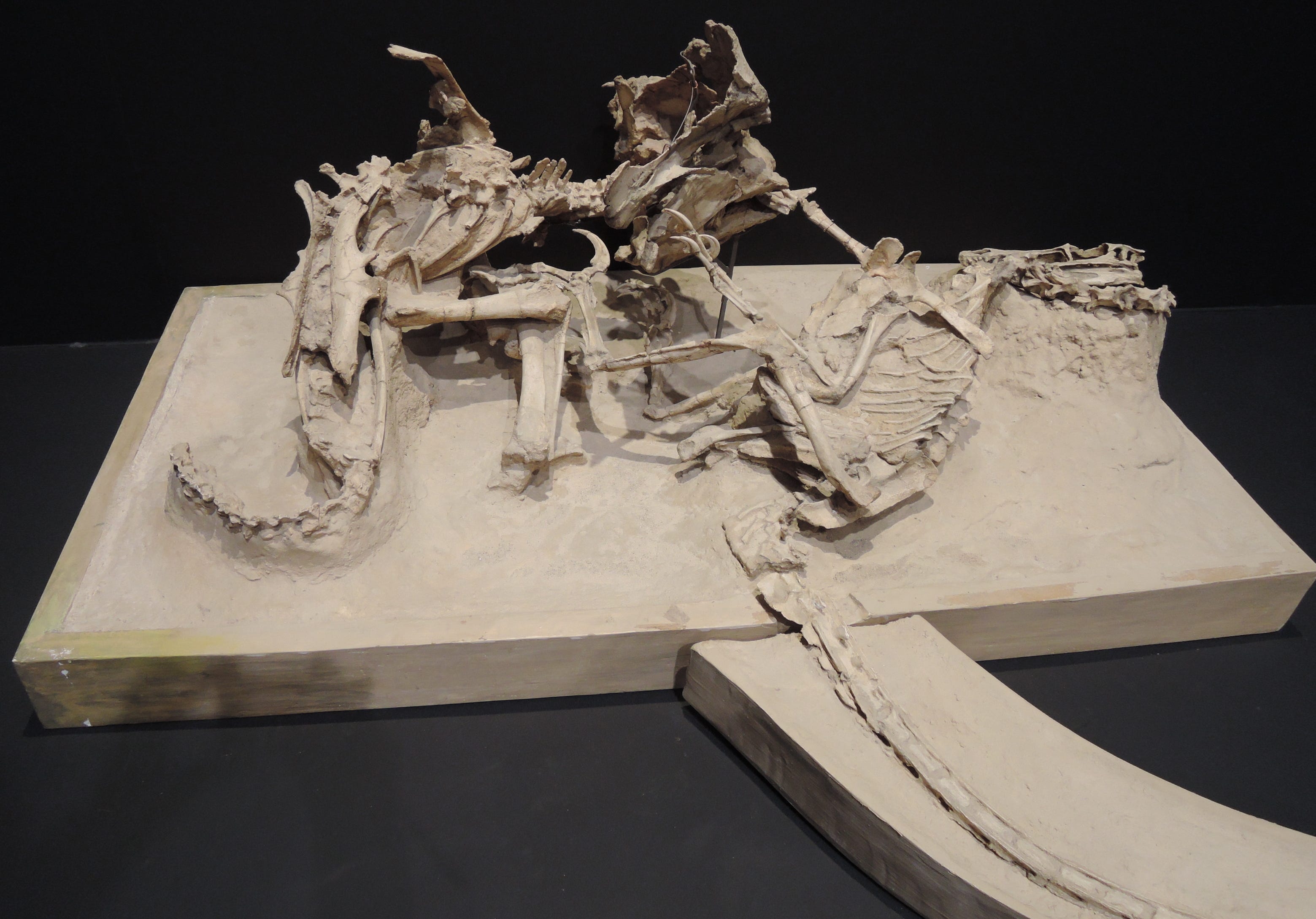
The legacy of the Dromaeosaurs is long and storied. Dromaeosaurus itself would remain in relative obscurity for everyone except dinosaur specialists and enthusiasts. And for half a century the whole family of animals was mostly relegated to a dusty shelf. 1969 would bring a major change. Ostrom’s in-depth description of the skeleton of Deinonychus was important because it brought the first description of a Dromaeosaur skeleton, and because it proposed that Dromaeosaurs only walked on two toes to keep its large inner claw off the ground. But, perhaps the most lasting impact of this paper comes from the illustration near the beginning drawn by paleontology legend Robert Bakker. This image has become the posterchild for the “Dinosaur Renaissance”: a period of time where dinosaurs went from being depicted as sluggish failures of evolution, to being the smart, fast, and successful animals we know today. Ostrom even began to speculate that these animals could somehow be related to birds. In 1972 a fossil was discovered called the “fighting dinosaurs.” This specimen included complete skeletons of a Protoceratops and Velociraptor preserved in their entirety in what appeared to be a final combat preceding their deaths. These discoveries begat a period of renewed interest in the dromaeosaurs and dinosaurs broadly. New species were named, the family tree was developed further, and Bakker, Ostrom, and others began to seriously argue for a close relationship between these animals and our modern birds… Then the nineties happened.
1993 turned out to be arguably the most important year ever for Dromaeosaurs when Jurassic Park released in theatres on June 11th. Its really this movie that solidified not only our perception of what Dromaeosaurs were like, but also popularized using the word “raptor” to refer to them. These movie “raptors” have been the subject of much heated discussion ever since, especially after later movies chose to stick with what would eventually become outdated reconstructions. This retrospect in my opinion has done a disservice to the people who made the models for the original movie. The model makers were in contact with several paleontologists, and for the time the depiction was remarkably good on an anatomical level. Of course, Spielberg’s decision to use the name Velociraptor with animals whose anatomy was really based on Deinonychus and whose size was larger than any dromaeosaur yet discovered was always going to rub some people the wrong way, but he created something iconic and there is something to be said for that. Few people in the world could have known that literally days after the release of the film, on June 18th 1993, the formal description of Utahraptor would be published: an animal whose proportions lined up much better with the movie’s depiction. Spielberg’s film would also popularize a set of “raptor” behaviors that also became iconic, despite their speculative nature. Dromaeosaur braincases were relatively large for their body size, so he depicted them as smart, very smart. He created an animal that had comparable intelligence to wolves, capable of forming complex social strategies like ambushes and testing fences for weaknesses. The idea of raptors as pack hunters was not entirely new, but the problem always was that there was almost no evidence, that is until 1994, when John Ostrom struck again. In a set of papers released in 1994 and 1995, he described a set of discoveries consisting of remains of the medium-sized herbivore Tenontosaurus in association with Deinonychus teeth and in one case partial skeletons of the theropod. He interpreted this as evidence for the pack hunting behavior paleontologists had been speculating about for a while, and had been depicted in the movie. All of this combined to give the “raptor” its reputation as the ideal killing machine.
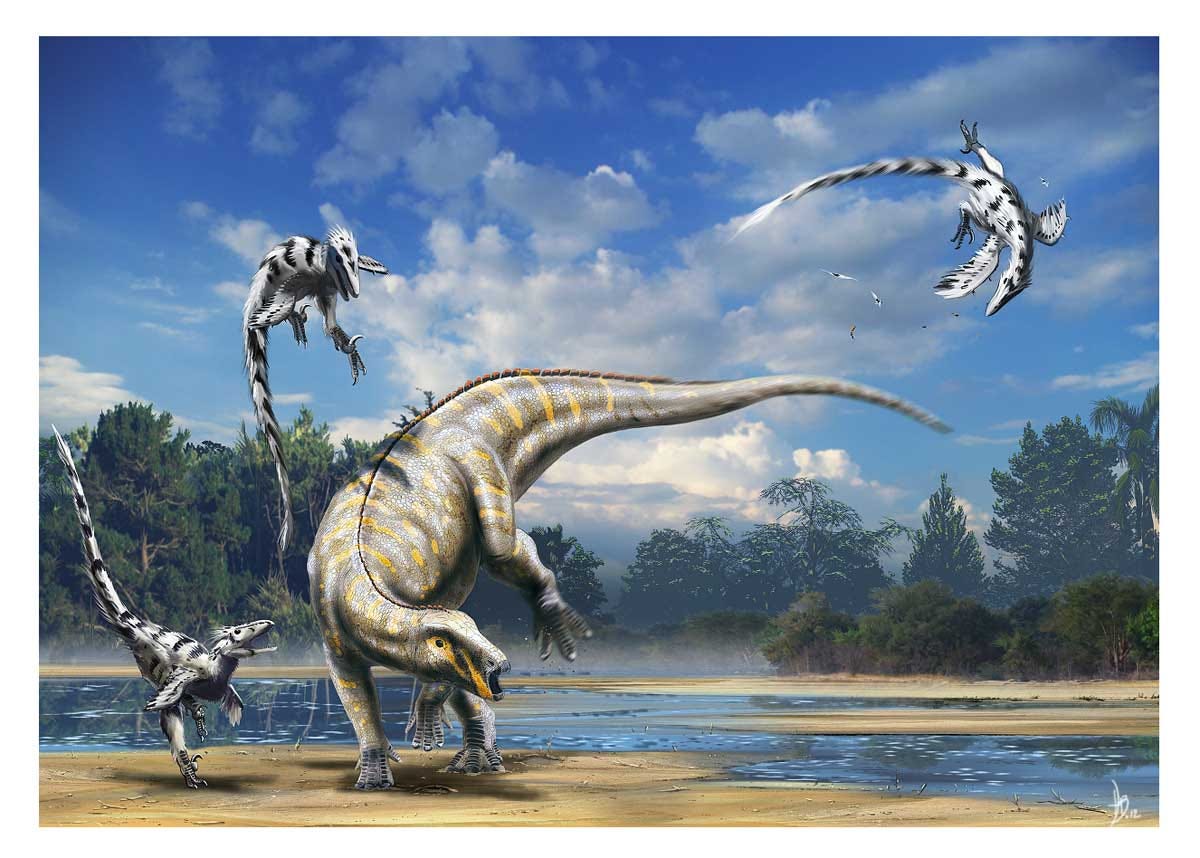
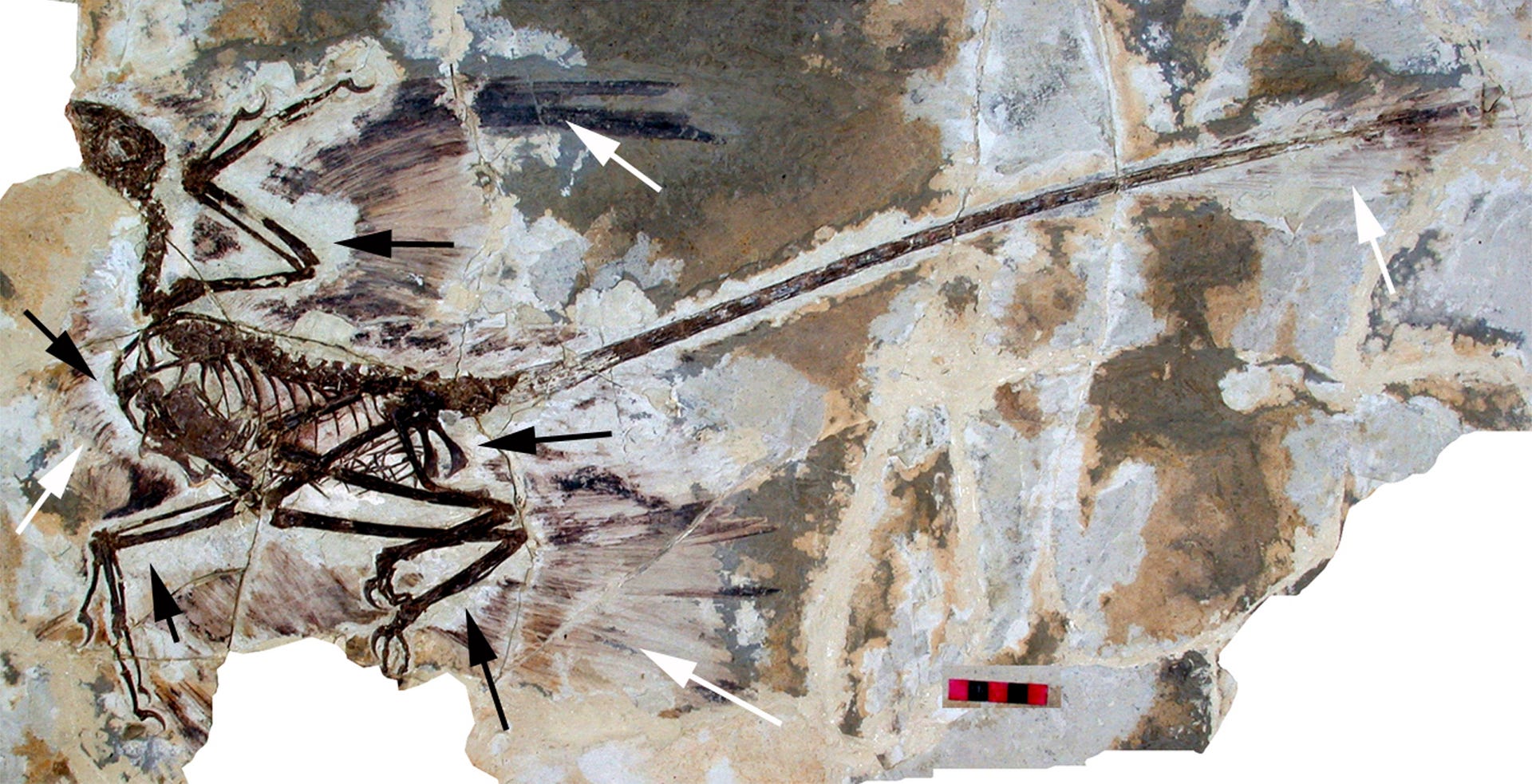
The final major raptor discovery of the nineties was the nail in the coffin for one of the biggest dinosaur debates of the century. The discovery was a small dromaeosaur called Sinornithosaurus. Sinornithosaurus was revolutionary because it was an exquisitely preserved specimen that contained such perfect detail that it betrayed something covering the animal’s skin in a fine layer: a coat of feathers. These feathers would later prove to be so well preserved that electron microscopy can even tell us what color the feathers were: an orange-ish brown that rings so familiar to colors in our modern birds. As the 90’s became the 00’s, dinosaurs as proto-birds increasingly became the norm. The discovery of more and more species of feathered theropods culminated with a paper by Alan Turner and others describing the discovery of quill knobs; lumps on the arm bones of birds that serve as anchor points for large feathers, found on the arm bones of Velociraptor. Though “feathers” on dromaeosaur depictions had become commonplace at this point, they were usually depicted as fluffy fur-like proto-feathers, and sometimes relegated to obscure species. But here was one of the most famous dinosaurs of all, with direct evidence of modern, complex, feathers. Though it wasn’t the first, it had a great impact by definitively showing an animal that everyone knew as a dinosaur with feathers. Not just a proto-bird, a dinosaur.
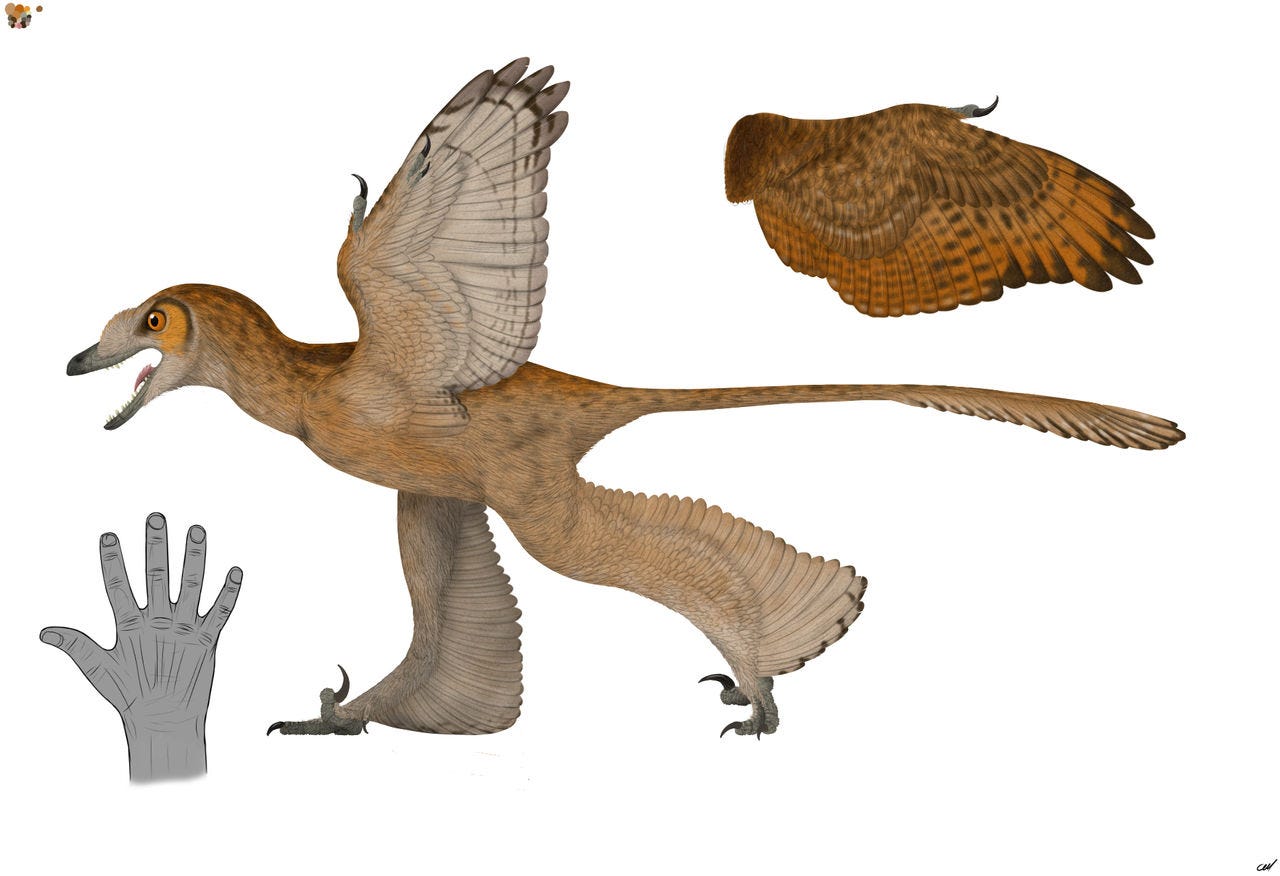
So as we start to wind down our history, it seems almost cliche to bring it all back to the claw. Why on Earth something could need a claw like that has been an open question ever since they were first unearthed. Early on it was assumed that the claw was used for slashing open prey in order to assist with killing. This vision became even more entrenched when the Tenontosaurus and Deinonychus association became common knowledge. However, as time went on and new methods of reconstructing and testing the anatomy and biomechanics of the animals became available, this theory changed. The claw was not sharp along the edges, only pointed at the tip, so slashing was not an option. Some early theories posited that they would be useful in climbing trees. Some posed a novel “kick-boxing” method for bringing down prey. Still others would create the theory that they would use it to hold small prey items down while making the kill. Its a weapon that is incredibly unique. And unfortunately for those of us who would love to have a simple answer, the truth is probably: it depended. Smaller species could use it to climb. Larger species could use it to hold prey. Modern Cassowaries are known to use their large (though notably straight, not curved) claws to protect themselves. So, a mix of all these theories may well pan out as we learn more.
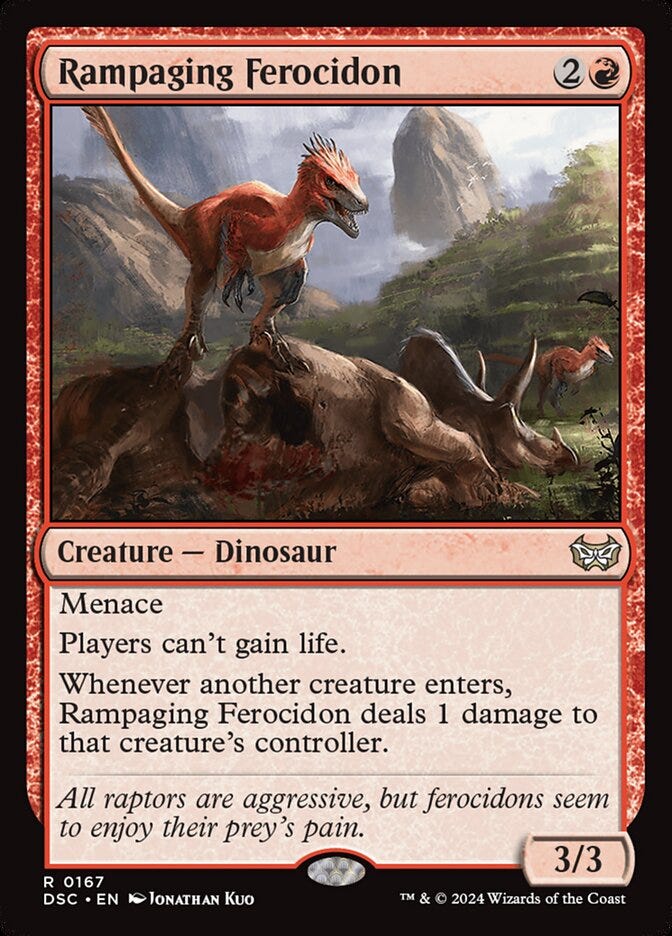
All of this information has painted a striking picture of these animals as intelligent, powerful killers. But throughout this time, these positions did not go uncontested. For example; it is true that Dromaeosaurs had large brains compared to other reptiles, but this does not indicate that they could form the complex social systems used by animals like wolves. The skeletons of multiple predators near an herbivore does not mean that they were responsible for its death. Just as likely of a scenario is that a single Deinonychus or another force entirely killed the Tenontosaurus (an animal much closer to the size of Deinonychus than you might think) and the raptors were just scavenging a conveniently large meal. The “Fighting Dinosaurs” has faced similar criticism. The brain-to-body-size ratio of dromaeosaurs in reality lies closely to that of a chicken, which does not make them unintelligent by any means. Chickens, and birds broadly are increasingly being found to be very intelligent. A few modern archosaurs (the group that includes dinosaurs, birds, and crocodilians) have also been found to engage in cooperative hunting behavior, but very rarely, and only under extreme circumstances. As such, the public perception of dromaeosaurs as ruthless, cooperative, deadly killers of large herbivores has drifted away from current thought about their real behaviors. Ironically, my comparison to cats at the beginning of this essay may turn out to be more apt than when I first conceived the idea. Dromaeosaurs are increasingly seen as largely solitary hunters that specialized in small, fast prey, but larger species were capable of taking on larger prey from time to time, perhaps working in pairs when the environment called for it, and filling in as flexible and robust predators wherever they could find space. We must always remember when discussing things like this that paleontology is an exceptionally young science, so its potential for big changes is higher than most. In some ways that’s what makes it exciting: there’s so much left to know. The Dinosaur Renaissance swung the pendulum of perception one direction: dinosaurs were active and fast. Now with violent, monstrous depictions becoming a little too commonplace, scientists have begun to swing the pendulum the other way: reminding us that violence and drama is often the exception, not the rule in the real world.
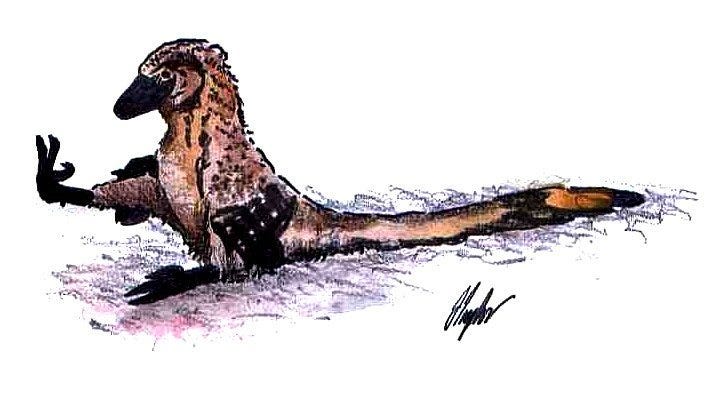
Dromaeosaurs are important for scientific reasons; yes, but they are important for another slightly more nuanced reason too. In my time on the internet, I’ve seen a lot of different things. Unsurprisingly I spent a lot of time in places dedicated to discussing dinosaurs and other prehistoric animals (shoutout to Paleontology Coproliteposting). Its in these spaces I ran across a very niche war. On one side was people who saw dinosaurs as something entertaining and scary. These people tended to be laymen, and would frequently defend decisions made by the people making dinosaur-centric entertainment like Jurassic Park to make dinosaurs more monstrous, even to the detriment of accuracy. They tended to fixate a lot on which dinosaurs would win in a fight, frequenting places like the Carnivora forums to hash out their arguments. These people came to be known as awesomebros due to their fixation on keeping dinosaurs “awesome.” A common refrain from the awesomebros was that feathers made dinosaur lame, unscary, or too cute. The “raptors” with their ironclad status as the ultimate killing machines and simultaneous strong evidence of feathers were the most common target of this. On the other side of this war were scientific enthusiasts and mostly young, educated people who wanted dinosaurs to always be presented accurately, even to the detriment of entertainment. These people often became obsessed with finding every little thing wrong with every fictional depiction of a dinosaur, even when a clear effort was made to adhere to accuracy and the wrongs they uncovered were only visible to a highly trained eye. Those who know me will know well which side I was on. This left many of us in the community with a chip on our shoulder about proving our side’s animals could be scary too. That backlash to this attitude is in part what led to the recent influx of dinosaur horror content featuring feathered dromaeosaurs. From short proof-of-concept animations to long-form Twitter threads with hidden lore, the echoes of this war are still being felt. However, more and more as I grew and matured I began to wonder why we felt the need to prove that our animals were horror-inducing. Its fine to make horror to be entertaining, but so often it would feel like we were just trying to be Alan Grant at the beginning of Jurassic Park, schooling a pompous child on the horrors of being hunted by a “real animal,” and failing. We were insecure. We were desperate for respect, and appealing for it only to each other.
In 2019, Dr. Derek D. Turner coined the term “historical cognitivism” to describe the way in which knowledge of a landscape or fossil’s past enhances and changes the way a person engages with and appreciates it on an aesthetic level. He defended this idea in a short book titled “Paleoaesthetics and the Practice of Paleontology.” I think this idea might help elucidate the exact reasoning for the disconnects and arguments that have arisen around Dromaeosaurs and other dinosaurs. In the book, he details how according to his theory, aesthetics is not just a tool of communication or emotion. Aesthetics are an important part of paleontological method and should be considered an equal partner with epistemic (pursuit of objective fact) concerns. With this as a basis, we can see this conflict as more than just an argument on the internet, we can see it as a conflict of scientific visions, and a potential failure of science communication.
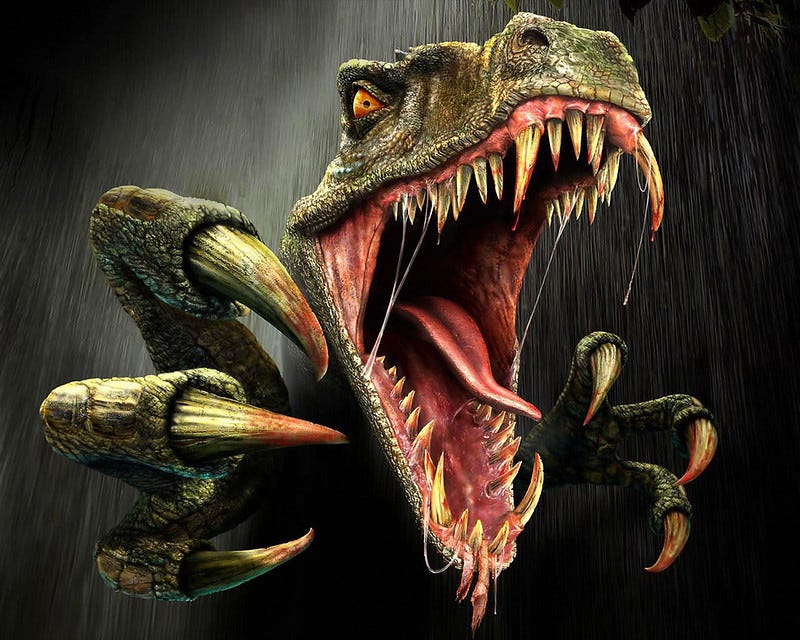
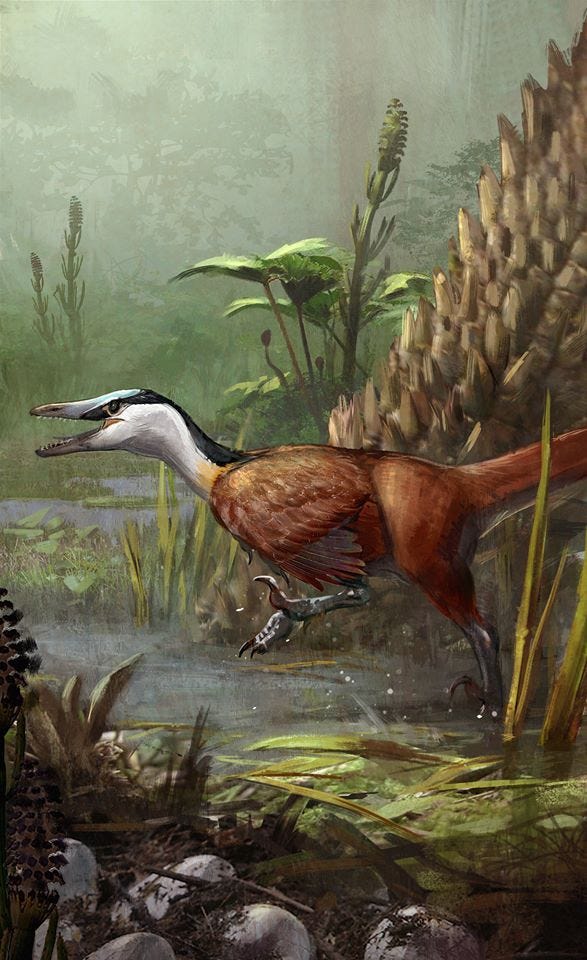
To borrow an ism from game design, we might place each of these visions for Dromaeosaurs into an aesthetic profile. One could be called the Awesomebro Monster, and the other the Holistic Animal. The Awesomebro Monster is a terrifying and powerful killer, blindingly intelligent, and even ugly at times. This creature hunts in coordinated packs, and kills for sport. Their name is whatever strikes the most awe and fear into an audience. Their calls are loud and they have a sense of timing and narrative that fiction inherently needs to serve its function. The Holistic Animal on the other hand is quiet. Their name is whatever a scientist thought would describe something important about it. They may have hunted together, or maybe not. They kill when they need food, and in conflicts with other animals over territory or mates. They are intelligent, and indeed fierce at times, but mostly curious, flighty, and often beautiful. I want you to take a moment and imagine something for me. Its something I’d wager many of you reading this have never imagined before: an elegant feathered Dromaeosaur in a moment of clumsiness. It runs after something and trips, or leaps after something and misses its target. Now imagine something else: a scary scaly Dromaeosaur sunbathing in the evening sun, or seeing another animal and just… walking away because it isn’t hungry. Is one of these profiles better than the other? I certainly know I have my preference, but there’s something of a yin-yang paradox going on with the two of them. Parts of one exist in the other. The Historical Cognitivist would say that the Holistic Animal is the deeper and more proper way to envision and appreciate the fossils before us. However, their view doesn’t exclude what it calls “naive appreciation” from being a genuine and valid way to appreciate nature. Maybe that’s how we aught to see the Awesomebro Monster: naive and missing pieces of the “real thing” sure, but they are engaging with a piece of something real, and that is worth something.
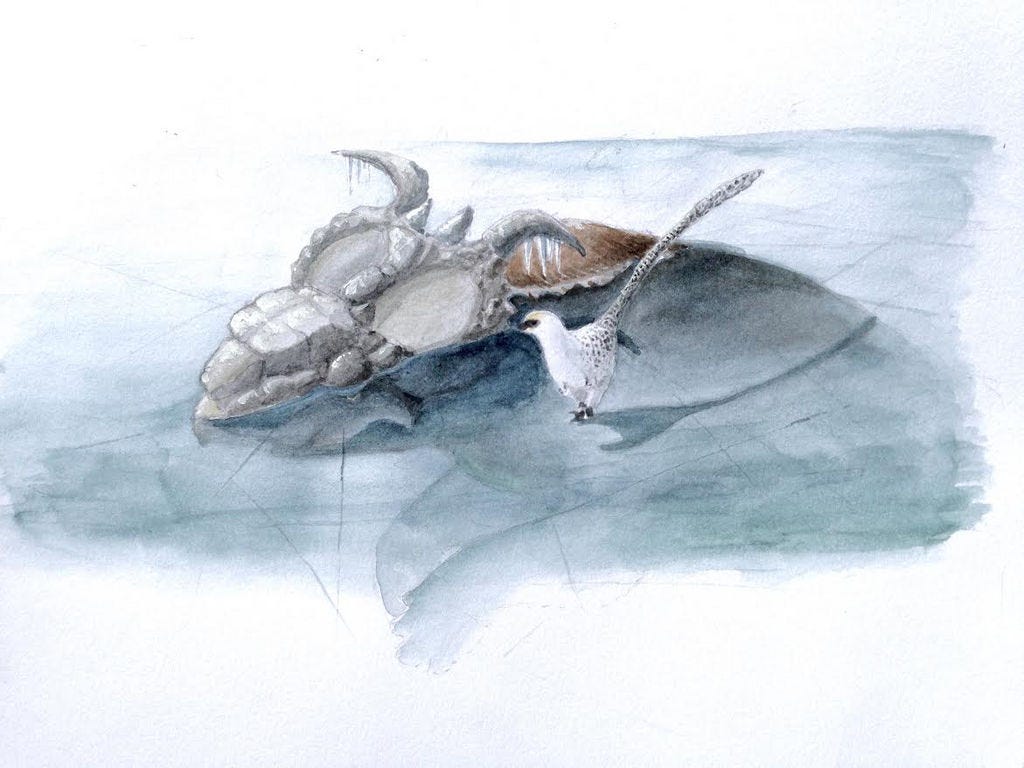
This essay has taken me a long time to complete. I really wanted to get it right. I’ve rewritten the conclusion half a dozen times. I set out at first to prove a point for my side, but as I wrote and read more, I found myself wanting to strike a balance or find compromise. In the end I don’t think I’ve done that. But, maybe I can offer the beginning of a synthesis. It seems fitting given the aesthetic focus of this problem that the synthesis comes in part through a painting. Its not one sitting in a museum, or even one a lot of people have seen, but it just might be my all-time favorite. It was created by a user called FluffySpiderz on Deviantart, and I’m sure they didn’t intend the meaning I’m about to read into it, but the rhetorical author is dead after all, so here goes. The central figure in the painting is a dead adult Pachyrhinosaurus encased in the ice of a frozen lake. How it died and ended up there is a mystery as most of its body is hidden bellow the surface. Maybe it died in a natural disaster like a flood, or maybe it was trying to cross the ice and broke through and drowned, or maybe it was killed by those awesomebro raptors who moved on to their next target without even eating it. Now, it’s frozen, stuck, and doomed to be a monument to whatever happened here. Standing next to it is a small Dromaeosaur called Saurornitholestes just observing it. The Saurornitholestes was not responsible for its death, and if it feels anything, it is gratitude for the free meal. I see myself in that little Saurornitholestes. In some ways I think that’s the curse of the paleontologist: we never get to see it happen. We’re always arriving after-the-fact. We watch the movies, we unearth the fossils, we interpret, we communicate, we learn. We aren’t fighting a war, we’re just a little late. Even once scientists have the information, getting it out to the public is its own monster of a problem. Sometimes we get lucky, and the fossil is exquisitely preserved, or the movie/show has serious care and attention-to-detail taken. For every 65, there’s a Prehistoric Planet, always seeming to reach a few fewer people. It starts to feel Sisyphean after a bit. But, I really don’t mind it, and I’d wager most paleontologists you’d ask would say the same thing. We’re never going to stop trying to solve the mystery of the Dromaeosaur’s killer claw, or a dozen other mysteries. For the facts and the fictions, whichever type of Dromaeosaur or disaster killed that Pachyrhinosaurus, we’ll be that little Saurornitholestes, just happy with whatever we find, there to work and there to wonder.
Sources Used:
Kirkland, James Ian, et al. “A large dromaeosaurid (Theropoda) from the Lower Cretaceous of Eastern Utah.” Hunteria, vol. 2, no. 10, 18 June 1993, pp. 1–16.
Matthew, William Diller, and Barnum Brown. “Article IV.” The Family Deinodontidae, with Notice of a New Genus from the Cretaceous of Alberta, Published by Order of the Trustees, American Museum of Natural History, New York, 1922.
Maxwell, W. Desmond, and John H. Ostrom. “Taphonomy and Paleobiological Implications of Tenontosaurus-Deinonychus Associations.” Journal of Vertebrate Paleontology, vol. 15, no. 4, 27 Dec. 1995, pp. 707–712, https://doi.org/10.1080/02724634.1995.10011256.
Osborn, Henry Fairfield, et al. Three New Theropoda, Protoceratops Zone, Central Mongolia, The American Museum of Natural History, New York City, 1924.
Ostrom, John H. “Deinonychus, the ultimate killing machine.” The Paleontological Society Special Publications, vol. 7, 1994, pp. 127–138, https://doi.org/10.1017/s2475262200009473.
Ostrom, John H. Osteology of Deinonychus Antirrhopus, an Unusual Theropod from the Lower Cretaceous of Montana, Peabody Museum of Natural History, Yale University, 1969.
Roach, Brian T., and Daniel L. Brinkman. “A reevaluation of cooperative pack hunting and gregariousness in deinonychus antirrhopus and other Nonavian theropod dinosaurs.” Bulletin of the Peabody Museum of Natural History, vol. 48, no. 1, Apr. 2007, pp. 103–138, https://doi.org/10.3374/0079-032x(2007)48[103:arocph]2.0.co;2.
Turner, Alan H., et al. “Feather Quill Knobs in the Dinosaur Velociraptor.” Science, vol. 317, no. 5845, 21 Sept. 2007, pp. 1721–1721, https://doi.org/10.1126/science.1145076.
Turner, Derek D. Paleoaesthetics and the Practice of Paleontology. Cambridge University Press, 2019.
Xu, Xing, et al. “A dromaeosaurid dinosaur with a filamentous integument from the Yixian Formation of China.” Nature, vol. 401, no. 6750, Sept. 1999, pp. 262–266, https://doi.org/10.1038/45769.